How to Book a Yacht Charter: Contract, Payments and Lead Times
Table of Contents
The yacht charter booking process in Spain is contract first, then instalments. Weekly crewed charters in the Mediterranean are commonly booked on the MYBA charter agreement, signed by you, the yacht owner, the charter company and a stakeholder that holds the charter funds. The first instalment is usually around 50% of the charter fee at signing, with the balance, VAT and APA due about four to five weeks before the charter. For a single day on the water, a day charter booked with the operator is the simpler route.
Who signs a yacht charter contract?
A weekly crewed charter in the Mediterranean is commonly written on the MYBA charter agreement, the standard contract of the Mediterranean Yacht Brokers Association, and it carries four signatures: the charterer, the yacht owner, the charter company and a stakeholder, the neutral party that holds the charter funds. The captain does not sign it, and runs the charter for the owner.
The stakeholder is the one party you are least likely to have dealt with before. Because that party is neutral, the charter funds are held there rather than by the owner. The charter company signs in its own right, alongside you and the owner. A weekly charter is a four-party agreement rather than a booking confirmation.
Identification arrives with the contract. You will be asked for identification documents for the contract. For a weekly crewed charter that contract is commonly the MYBA charter agreement, signed by you, the yacht owner, the charter company and the stakeholder that holds the funds. We suggest gathering identification for the lead charterer before the draft agreement lands, so a provisionally held date is not spent waiting on paperwork.
The captain's position is operational rather than contractual: the captain runs the charter for the owner and is not a party to the agreement you sign. That split is worth holding in mind once aboard. Itinerary preferences, timings and the routine of the week are a conversation with the captain; for anything written into the agreement itself, ask us, since the charter company signs that agreement in its own right alongside you and the owner. Nothing about that division limits what you can ask for; it only decides who you ask.
Weekly crewed charter or day charter?
Weekly crewed charters and day charters are booked on different paperwork, and the money moves to a different rhythm. On a weekly charter under MYBA terms the first instalment is usually around 50% of the charter fee at signing, and the balance arrives later with VAT and the APA. Day charters are simpler: operators commonly take a deposit, often around 50%, to confirm the date, and the balance before or on the day.
| Option | Deposit at booking | Balance due | Typical charter length |
|---|---|---|---|
| Weekly crewed charter on the MYBA agreement | Usually about 50% at signing | Usually about 4–5 weeks before | One week standard |
| Day charter booked with the operator | Often around 50% deposit | Before or on the day | Single day |
We would let charter length decide: the MYBA weekly agreement suits a trip planned around a stay aboard, while a day charter booked with the operator suits a single outing.
Which route fits depends on the shape of the trip rather than on the yacht alone. For a stay aboard with crew, ask us to confirm in writing that the weekly MYBA agreement applies and how the instalments are staged. For a single outing, or a date only weeks away, ask the operator to confirm the deposit needed to hold the date and when the balance falls due. Neither route rewards guessing about length after a contract has been drafted.
Length is rarely a free choice in the peak weeks. The standard charter length is one week, and owners decide whether they accept shorter charters in high season, so ask before any contract is drafted whether a four- or five-day request in July or August will be accepted at all. For those same months, the most popular yachts book six to twelve months ahead, so check your preferred dates against that window early rather than late. Request the answer in writing, together with the deposit figure and the date the balance falls due, so the two routes can be compared on the same terms.
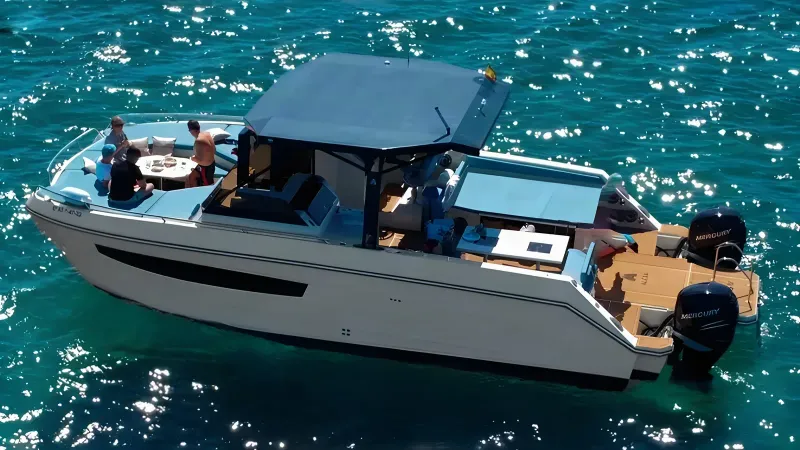
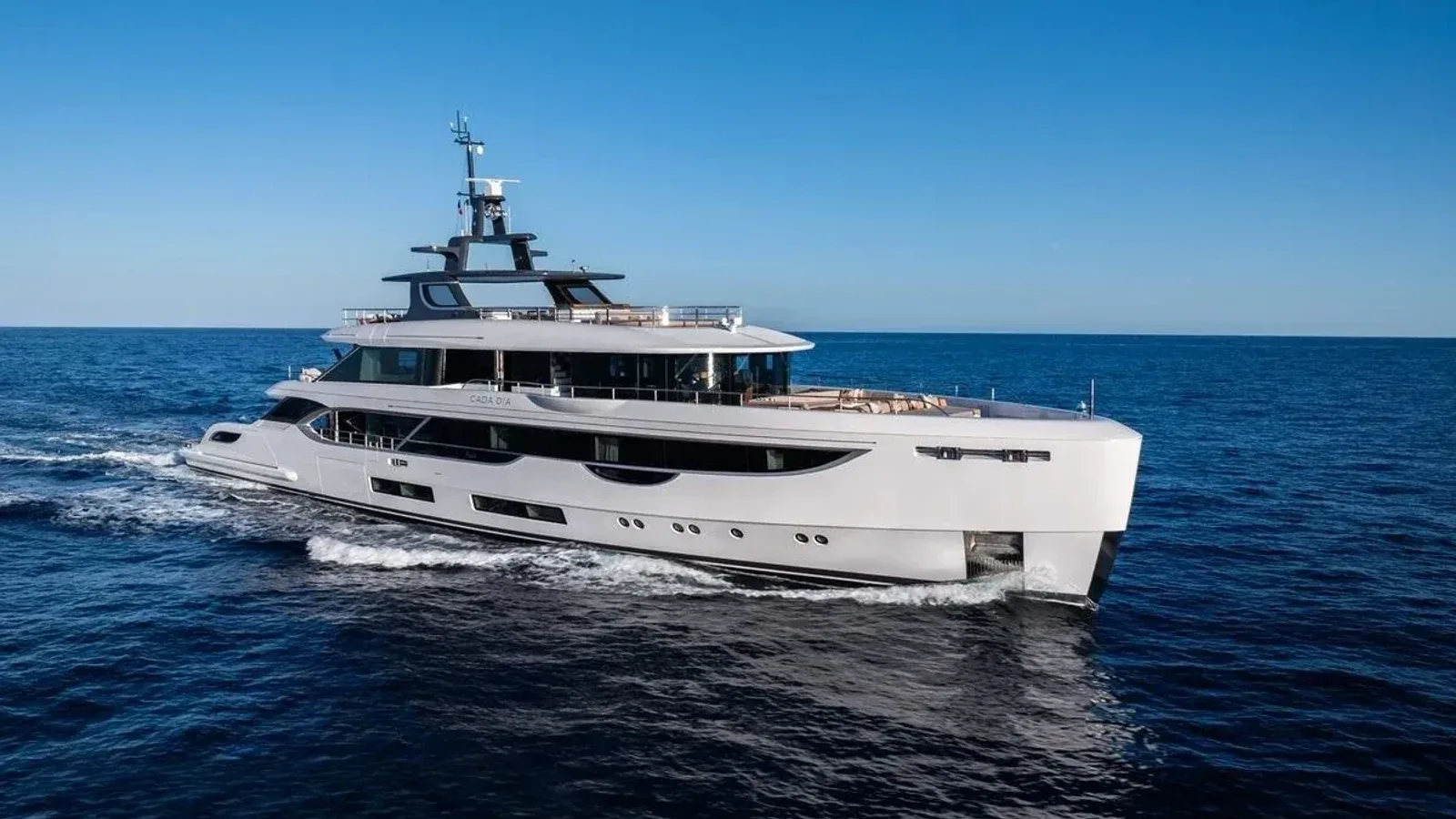
Either route is easier with a shortlist in hand. Naming two or three candidate yachts before terms are discussed keeps the conversation short and specific, and the crewed yacht charter collection is a practical place to assemble one. Two examples among the current listings, the Azimut Grande 27 and the Bali 5.4, are set out further down this page. We suggest noting against each candidate whether you want a full week or a single day, because the answer decides which contract arrives.
When does each payment fall due?
Under MYBA terms a weekly charter is paid in two movements. The first instalment is usually around 50% of the charter fee at signing. Three amounts then arrive together about four to five weeks before the charter: the balance of the fee, VAT and the APA. That second date is the one to put in a diary on the day the contract is signed, and an assistant handling the booking needs both dates rather than only the first.
Release of the funds is the other half of the timeline, and it is the stakeholder's task rather than yours. The stakeholder pays the owner 50% of the charter fee when the charter starts. The balance reaches the owner after the charter ends.
One mechanism is worth knowing before you need it. If you file a written complaint, the stakeholder holds the balance for 14 days, or until an arbitration award if either side starts arbitration. The hold depends on a complaint being written and on record.
We suggest putting anything serious in writing while the charter is running or immediately after it ends, and copying us as well as the stakeholder.
What happens if you or the owner cancels?
Cancellation runs in both directions, and the charterer's side comes first. Under the standard MYBA terms, if you cancel before the final instalment is due, the owner keeps the first instalment. If you cancel after that point, the owner keeps all instalments due. In either case the owner must try to re-let the yacht and credit you the net proceeds of any re-letting for your dates. Your own contract sets the exact terms.
We recommend reading the cancellation clause of the agreement in full before signing, and asking us to point out where the re-letting and credit wording sits. It is a short clause with a long consequence.
The owner's side carries compensation as well as a refund. As of 5 October 2026, if the owner cancels for reasons other than force majeure, you receive a full refund plus compensation of 25% of the charter fee when the owner cancels 30 days or more before, 35% when more than 14 but fewer than 30 days before, and 50% when 14 days or less before. A cancellation for force majeure sits outside that scale.
A cancellation close to the dates leaves a practical problem on either side, which is finding another week that works. A shortlist kept from the original search is the quickest route to a replacement.
If flights are being arranged around the same dates, compare routes, costs and booking lead times for private jet charter in Spain before you commit to a charter week.
How far ahead should you book?
For weekly charters in July and August, the most popular yachts book six to twelve months ahead. High summer is therefore planned in months rather than weeks, and the standard charter length is one week, with the owner deciding whether a shorter charter is accepted in high season.
Two habits make that lead time workable. Fixing dates and guest numbers early turns a general enquiry into something an owner can answer, and keeping a second and third candidate in reserve stops a committed first choice from ending the search. The yachts available for charter are where that reserve list comes from. Precision costs nothing at this stage and saves a second round of questions.
If the plan cannot stretch to a full week, we suggest putting the shorter-dates question to us at the shortlist stage rather than after a yacht has been chosen.
What shapes the figures: two yachts currently listed
Percentages become real money once a yacht is named. Among the current listings, as of October 2026, the Azimut Grande 27 is a motor yacht for ten guests, listed as available at €5,500 per day and from €33,000 per week. The Bali 5.4 is a catamaran for ten guests, listed as available at €3,200 per day and from €19,000 per week.
Figures like these are what the instalment percentages apply to, which is why pricing a shortlist before the contract stage is time well spent.
For the days either side of the charter, our luxury car rental tips and guides are a useful companion.
Five questions close most of what a quote leaves open. We suggest asking what the quoted fee includes, whether VAT and the APA are quoted separately, which party will act as stakeholder, what the cancellation clause says, and whether the owner will accept your dates. Dates, party size and preferred charter length in a first message save a round of email.
Enquire about crewed yacht charter in Spain
Frequently asked questions
Does the captain sign the MYBA charter agreement?
No, the captain does not sign the MYBA charter agreement, although the captain runs the charter for the owner. The four signatures come from the charterer, the yacht owner, the charter company and the stakeholder that holds the charter funds. Day-to-day requests aboard are a matter for the captain, while anything contractual goes back through the charter company that signed.
What documents will you be asked for at signing?
You will be asked for identification documents for the contract. Having identification ready for the lead charterer before the draft arrives keeps signature from becoming the slow step in an otherwise agreed booking.
When does the owner receive the charter fee?
The stakeholder pays the owner 50% of the charter fee when the charter starts, and the balance after the charter ends. If you file a written complaint, the stakeholder holds the balance for 14 days, or until an arbitration award if either side starts arbitration. Both movements are the stakeholder's to make, not the charterer's.
What deposit does a day charter usually take?
Operators commonly take a deposit, often around 50%, to confirm the date. The balance is due before or on the day.