Empty Legs from Zurich and Geneva: Savings, Timing and the Permit Rule
Table of Contents
A charter flight flown without paying passengers on board is known as an "empty leg". Empty legs save up to 50–75% against a standard charter, with dates and routes set by the operator, who can cancel if the aircraft is booked for another trip. As of November 2026, we recommend an empty leg from Zurich or Geneva only when your dates and routing can move. If your plans are fixed, a standard on-demand one-way charter is the better buy.
What is an empty leg, and when is it the right private aircraft option?
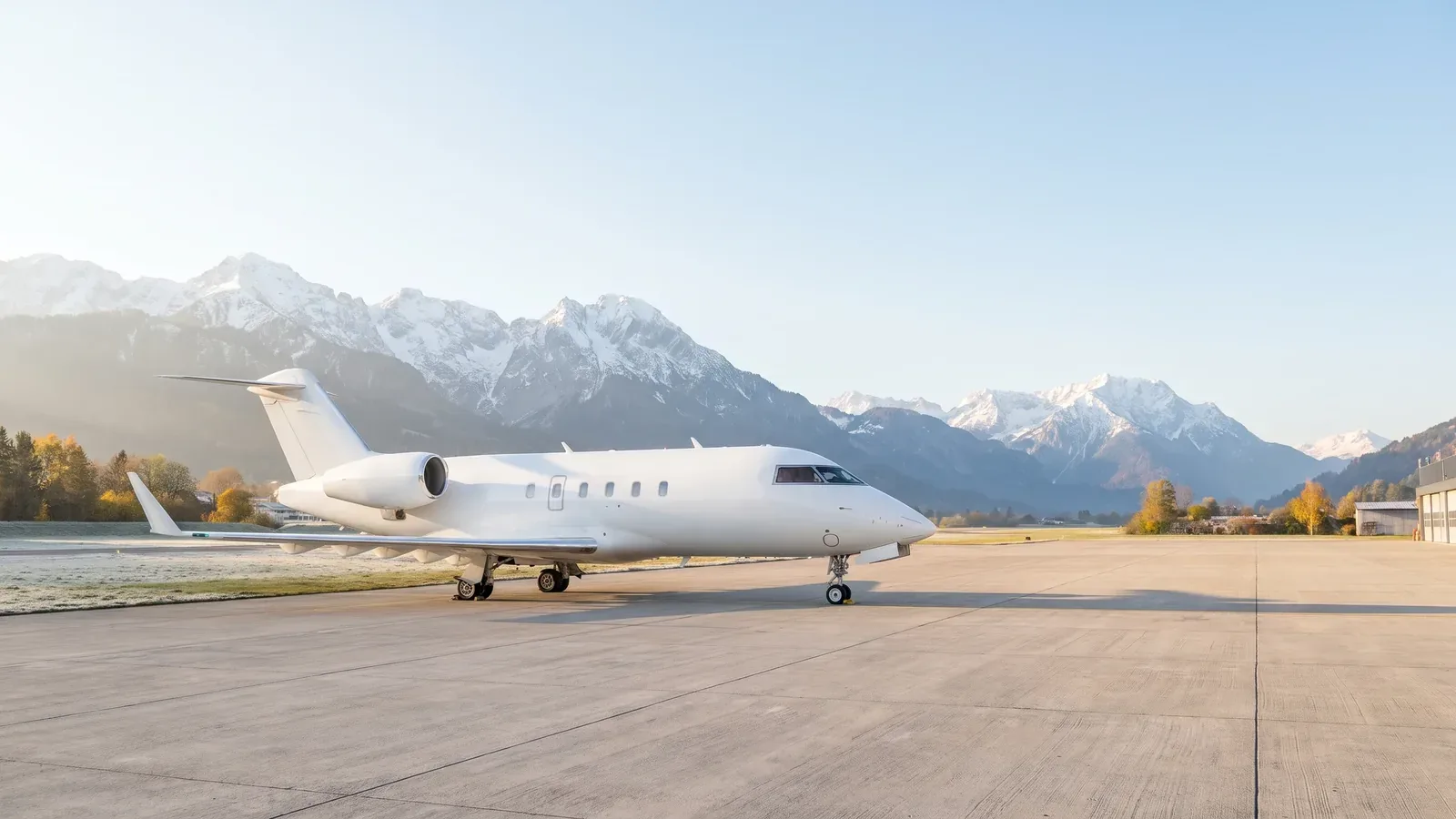
A charter flight flown without paying passengers on board is known as an "empty leg". Those flights are offered to customers at reduced prices. Current empty legs are listed on our website.
The discount follows the aircraft rather than the passenger. An empty leg arises when an aircraft needs to reposition without passengers, and its dates and routes are fixed by that movement. The saving and the constraints come from the same place.
Read an offer in four parts: the two airports, the date and planned departure time, the aircraft category, and how many seats you may fill. Where one of the four does not match the trip you intend to make, the price stops being the relevant number, because the flight exists to move the aircraft rather than to serve your itinerary.
Empty legs are one-way flights. A return itinerary therefore needs its second direction priced separately, either as another positioning flight that happens to suit you or as an ordinary charter. For a trip that was always one way, a relocation, a seasonal move, a single meeting at the far end of the continent, the format fits without compromise.
A listing is a snapshot of an aircraft's plan, so the productive habit is to set your own parameters first: the earliest and latest departure you could accept, the airports within reach of your destination, and the number travelling. With those three settled, an offer either fits or it does not, and the decision takes minutes rather than days. The opposite approach, browsing first and deciding afterwards, produces a lot of offers you cannot use.
Readers weighing the same offer type in another market can use our guide to private jet empty legs in Spain.
How do empty-leg costs compare with a standard one-way charter?
The two options are priced on different logic, one by the hour and one against a flight the aircraft is making anyway. As of November 2026, for a one-way charter based on jet card pricing, expect to pay about $7,000 per hour for turboprops, $8,500 for light jets, $12,500 for super midsize jets and $21,000 for ultra long-haul jets. An empty leg is offered at savings of up to 50–75% compared with a standard charter, with its dates and routes set by the operator.
| Option | Cost band | Who sets dates and routing | Cancellation risk | Best use case |
|---|---|---|---|---|
| Empty-leg one-way out of Zurich or Geneva | Up to 50–75% below standard charter | Operator and aircraft schedule | Operator may change or cancel | Flexible plans, not fixed schedules |
| Standard on-demand one-way charter | Hourly jet card rates by category | Your date and routing | Ask the operator about terms | Trips on a fixed date |
We would take the empty leg where the operator's dates and routing can define the trip, and the standard one-way charter where the date has to be ours.
When a trip has to happen on a named day and into a named airport, the hourly level is the price of that certainty. When the day and the airports can follow the aircraft, the saving is available instead.
The charter benchmark is expressed per hour. Ask for the estimated flight time for your sector alongside the rate, because a category rate on its own does not tell you what the trip costs.
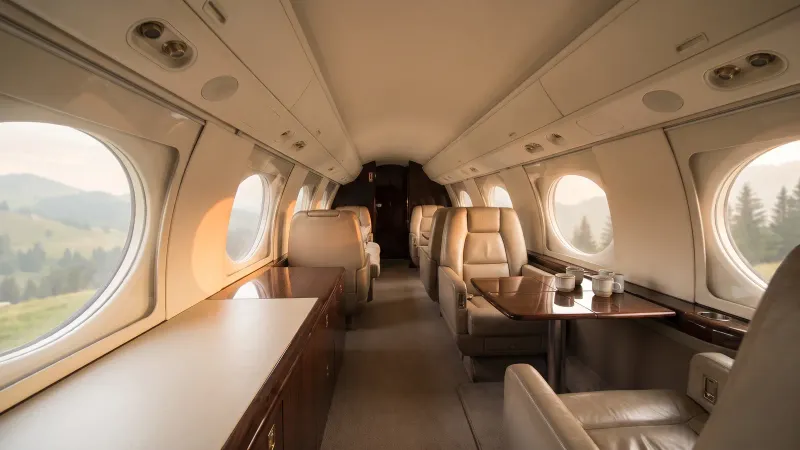
Aircraft category is the other variable that moves the number, rising from turboprops through light and super midsize jets to ultra long-haul aircraft. An empty leg gives you whatever category is already moving, so where cabin size matters to the trip, the category on offer is the first thing to look at, not the price.
Ask for a standard charter price for your preferred date next to any empty-leg offer. Set against each other for the same journey, the saving becomes visible against the trip you actually want rather than against a category average.
One cost sits outside both prices. The operator can change or cancel an empty leg if the aircraft is booked for another trip.
The reverse case is simpler. If the date cannot move, the choice is not between two prices but between flying on your date and not flying, and the hourly charter level is what that costs.
What do you trade on timing, routing and cancellation?
The operator can change or cancel an empty leg if the aircraft is booked for another trip, which is why empty legs suit flexible plans rather than fixed schedules. The dates and the routes arrive fixed by the aircraft's own schedule.
How wide is your departure window, in hours rather than days? Can the arrival airport move within the region you are heading for? And is the party small enough for the cabin that happens to be moving? Where all three answers are open, the operator's control over the schedule costs you very little.
A leg offered the evening before a morning meeting buys you a hotel night. A leg offered into a secondary airport buys you a longer drive at the far end. Neither is a reason to decline, but both belong in the figure you set against a fixed-date charter.
Arriving a day early, moving a meeting to the afternoon, or accepting a destination region instead of a single airport turns a rigid itinerary into one an aircraft's schedule can serve. That work happens before you look at offers, not after one appears.
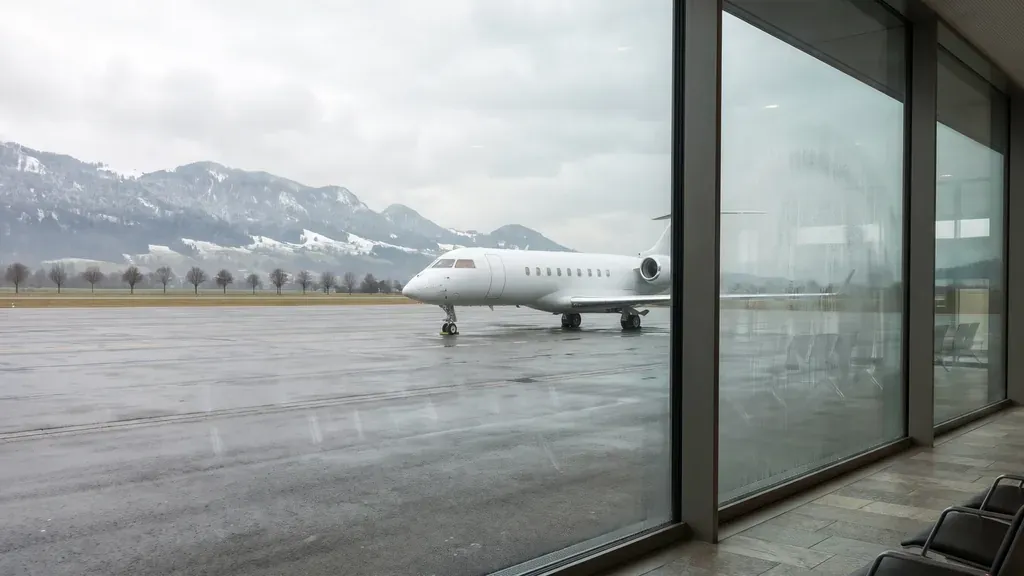
Hold a fallback for the same day and agree in writing what happens to your money if the leg falls away.
The aircraft on offer is the one that needs to reposition. Confirm its seat count and baggage allowance against your party before you accept.
Cancellation reads differently in the abstract than it does on the day. A leg withdrawn two days out is an inconvenience. The same leg withdrawn the night before, with the party assembled and ground transport booked, is a different problem, and that version of the day is the one to plan against.
How late can flights operate at Zurich and Geneva?
As of November 2026, scheduled operations are permitted until 11pm at Zurich Airport and until midnight at Geneva Airport, with an extension of half an hour for delayed flights. In Switzerland, non-commercial flights are prohibited from taking off or landing between 10pm and 6am.
The two limits are separate and attach to different kinds of operation, so which one governs a particular leg depends on how that flight is classified. Ask the operator which window applies to the aircraft and flight on offer, and confirm the planned departure time against it.
Release timing belongs to the operator in the same way. An empty leg exists once the aircraft's next repositioning flight is known, and its date and route come from that schedule. Telling the operator which routings, dates and cabin sizes you would accept is more productive than watching a page, since an offer can then be matched to your constraints as soon as the movement is set.
Late departures reward a conservative plan. A leg scheduled close to the end of the evening leaves little room for a passenger stuck in traffic or a slow transfer into the terminal, and a delay that would be trivial at midday becomes decisive at the edge of the window. Build your own arrival at the airport around the earliest plausible departure, and treat the later end of the evening as the point where options narrow rather than where they open.
Those windows also shape the ground side of the trip. An evening departure from either airport means the drive, the documents and the walk to the aircraft all happen inside a closing window, and a late start on the road is the simplest way to lose an otherwise usable slot.
Booking a flight inside Switzerland always needs a permit
Cabotage flights within Switzerland are not governed by the existing bilateral air services agreements and always require a permit.
A leg between two Swiss airports therefore depends on that permit being in place for the operator and the flight concerned. Ask for that confirmation before committing to a domestic routing, and keep the question separate from availability: an aircraft can be free while the routing stays closed.
The point is cheapest to resolve early. If the operator cannot confirm the permit, ask about a different routing or a different departure point instead of waiting for a later answer.
Enquire about an empty leg or a fixed-date charter
One message does the work. Send the departure and arrival airports, the travel date, the number of passengers, your luggage and the aircraft category you have in mind, and ask for an empty-leg option and a fixed-date charter price side by side so the choice stays yours.
If the departure point is still open, our comparison of private jet charter from Zurich or Geneva sets out what separates the two airports for a charter departure.
Enquire about a private jet from Zurich or Geneva
Common questions about empty legs
Can the operator cancel an empty leg after I book?
Yes: the operator can change or cancel an empty leg if the aircraft is booked for another trip, which is why empty legs suit flexible plans rather than fixed schedules. Agree the fallback in writing before you pay, so the alternative is settled while there is still time to use it.
Are empty legs cheaper than a standard one-way charter?
Yes: empty-leg charter flights are offered to customers at reduced prices. The saving runs up to 50–75% compared with a standard charter, with the dates and routes set by the operator.
How late are flights permitted at Zurich and Geneva airports?
Scheduled operations are permitted until 11pm at Zurich Airport and until midnight at Geneva Airport, with an extension of half an hour for delayed flights. Check the planned departure time for the leg you are offered against the window that applies to it.
Can I use an empty leg for a last-minute flight?
It can, where the plan is able to move: current empty legs are listed on our website, with dates and routes fixed by the aircraft's schedule. The operator can change or cancel the leg, so the format suits a trip that can shift rather than a fixed appointment.